PngText
AI image Generator editing

AI Clothes Wrinkle Remover

An AI clothes wrinkle remover is not a blur aimed at a shirt. Cloth folds for reasons, and a fold carries information about how a body is standing inside it, which is why the tool has to decide what a particular line means before it can be softened.

Read the cloth before smoothing it

AI Clothes Wrinkle Remover

Ironing a shirt before a shoot is easy; the problem is what the shirt does once somebody sits down, leans on a table, or stands with one hand in a pocket. Photos get the aftermath, and an AI clothes wrinkle remover works on the aftermath rather than on the garment. It only works well when the AI clothes wrinkle remover recognizes that not every line across a garment is damage. Some are structure, some are tension, and some are simply the way light falls over a curve.

  • Tension creases, drape folds, and lighting gradients treated separately
  • Structural lines that describe a pose left in place
  • Seams, buttons, collars, cuffs, and prints protected through the pass
  • Fabric character kept rather than flattened into plastic
A shirt photographed with heavy storage creases beside the same shirt after the marks are lifted

AI Clothes Wrinkle Remover

Three different things call themselves a wrinkle

Why a garment cannot be smoothed as one surface.

The rest of this page sets out how an AI clothes wrinkle remover should separate the lines that cross clothing into the categories that behave differently under editing: the sharp crease left by a fold in storage, the soft fold created by a body's weight, the long drape that describes how a garment hangs, and the shading that looks like a fold but is only light. Only two of those should be touched at all, and telling them apart is most of what an AI clothes wrinkle remover does.

A folded shirt with a sharp storage crease across the sleeve and flat fabric on either side

AI Clothes Wrinkle Remover

A crease is a memory in the fiber

The line down the arm of a jacket that has hung in a wardrobe and the line across a shirt that has sat folded in a drawer are both impressions left by pressure over time. They sit in a fixed place, they are narrow and sharply defined, and they do not respond to what the body under them is doing. These are the genuine targets. Any AI clothes wrinkle remover that starts here is on solid ground, because the surrounding fabric already gives an AI clothes wrinkle remover a clean surface to continue: the weave on either side of the line is undisturbed and the direction of the material is known.

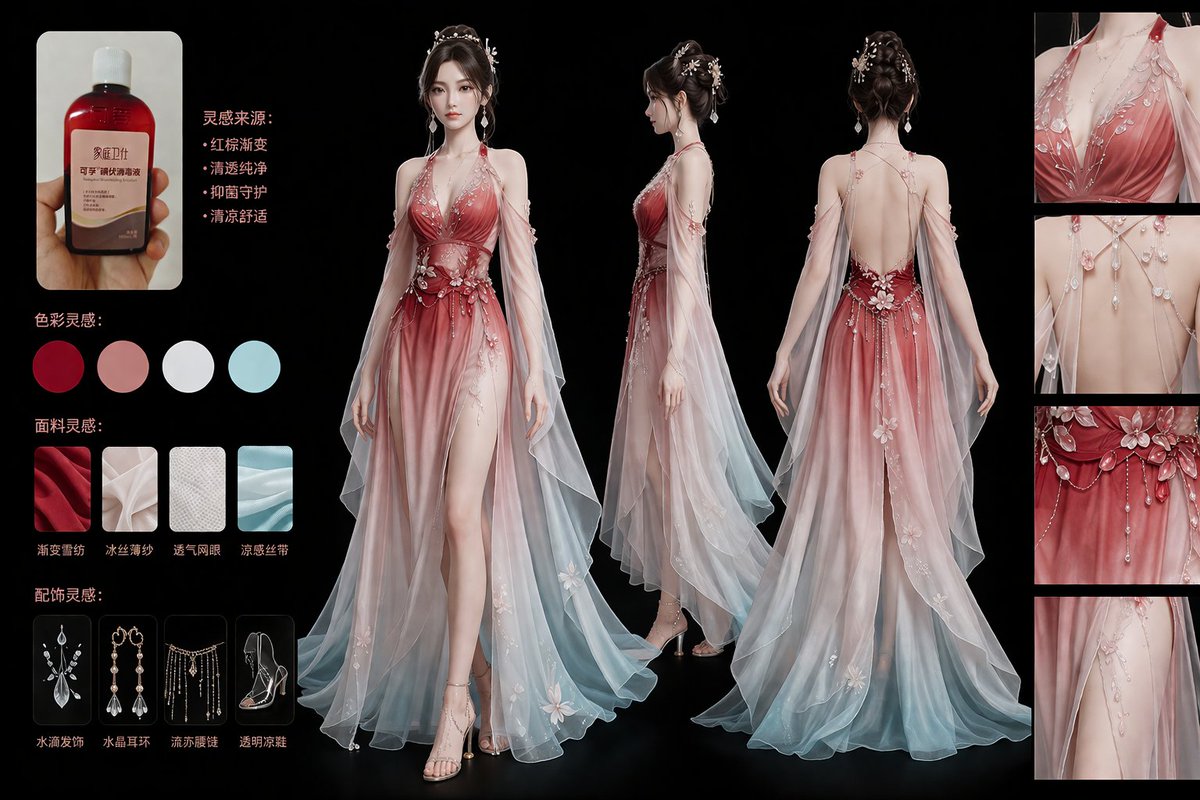
A seated figure with folds radiating from the waist and knee, showing how the pose creates them

AI Clothes Wrinkle Remover

A fold that follows a joint is describing the pose

Where an elbow bends, where a waist meets a belt, where a seated body presses into a chair, the cloth gathers because something underneath has changed shape. Flatten those and the pose stops making sense: an arm that looks straight while the hand rests on a hip, a torso that reads as flat despite being visibly twisted. This is the most common failure of an AI clothes wrinkle remover, and it is not a technical limitation so much as a decision made wrongly. An AI clothes wrinkle remover asked to flatten everything will flatten the pose along with the marks. Tension created by the body is not a defect; it is the evidence that a person is in the clothes.

The hem of a long skirt photographed twice to show how weight and fabric change the fall of the cloth

AI Clothes Wrinkle Remover

Drape is what the fabric is doing by itself

Between the tension points there are long, soft, slow curves where cloth hangs under its own weight: the fall of a skirt from the hip, the weight of a coat sleeve, the way silk settles and the way heavy wool does not. These communicate material as much as shape. A linen shirt and a satin blouse photographed in the same pose should not produce the same creases, and a wrinkle removal pass that erases the difference has removed the most useful information in the photograph. Preserving drape while clearing the marks on top of it is where judgment actually enters, and it is the difference between an AI clothes wrinkle remover that understands cloth and one that only understands surfaces.

A torso lit from one side where the soft shading down the ribs resembles a fold but has no edge

AI Clothes Wrinkle Remover

Some of what looks like a fold is only shading

A soft gradient running down the side of a torso can read as a wrinkle at a glance, but nothing in the garment is folded there. It is the light rolling off a cylindrical surface, and it is the same shading the arm on the other side would show. Treating it as a crease and lifting it out is a mistake an AI clothes wrinkle remover makes on smooth fabrics in particular, and it produces a body with no roundness, which is the particular flat look that over-worked clothing retouching is known for. Checking whether a line has a corresponding edge, or only a change of brightness, is the quickest way to tell the two apart before you hand the frame to an AI clothes wrinkle remover.

A striped shirt with a logo on the chest where the pattern lines and print must stay undistorted

AI Clothes Wrinkle Remover

The details sitting on the cloth are the constraint

A garment is rarely a plain surface. There are seams that must stay continuous, buttons that must keep their spacing, topstitching along a placket, cuffs that should stay crisp, and prints that sit at a fixed angle across the chest. Every one of them is a rule the smoothing pass has to obey. Logos and repeated patterns are the strictest test, because a slight warp is instantly visible against the regularity of the rest. Previewing on a garment with fine stripes or embroidery is a fair way to judge how carefully an AI clothes wrinkle remover is working, since a pattern leaves nowhere for a distortion to hide.

A garment listing photo beside the same item with its weave and stitching visibly softened

AI Clothes Wrinkle Remover

What it is for, and what it should never do

Cleaning up a shirt before it goes into a listing, a team page, or a graduation portrait is ordinary work, and the result is a better version of an accurate photograph. The line is crossed when the garment stops being the one that was worn: a dress shown with folds removed that is being sold as the item as it hangs, or a fabric presented with its texture smoothed away so that a buyer cannot judge it. As long as an AI clothes wrinkle remover improves presentation and leaves the item itself alone, it is doing the job it is meant to do for a listing or a portrait.

AI Clothes Wrinkle Remover

How the cloth is read before anything is smoothed

The distinctions that keep a garment looking like fabric.

Crease separated from fold

Marks left by storage pressure sit in a fixed place and are removed. Gathers created by a bending joint stay where they are, because they carry the pose, and an AI clothes wrinkle remover is expected to tell the two apart before it touches either.

Drape left intact

The long soft curves where cloth hangs under its own weight define the material. An AI clothes wrinkle remover should treat them as content rather than as something to be corrected.

Shading told apart from edge

A gradient with no corresponding edge is light over a curve rather than a wrinkle, and lifting it out is how an AI clothes wrinkle remover ends up leaving a body looking flat.

Pattern and print held square

Stripes stay parallel, checks stay aligned, and a logo keeps its shape. Regular patterns are the fastest way to spot a smoothing pass that has distorted something.

Construction protected

Seams, topstitching, button spacing, collars, and cuffs come through unchanged, since those are the parts a viewer uses to judge whether a garment is well made.

Lighting on the fold preserved

Where a crease has a lit side and a shaded side, the shading is rebuilt along with the surface, so the new material is not lit differently from the rest of the garment.

AI Clothes Wrinkle Remover

Working through a garment in order

Four steps, from reading the fabric to checking the result.

1

Decide which lines are targets

Look at every line crossing the garment and sort it into one of three: a mark from storage, a gather following a joint, or shading with no edge. Only the first kind goes on the list an AI clothes wrinkle remover is allowed to work on.

2

Start at the plainest panel

Begin on a broad area away from seams and prints, so the result can be judged on its own. That first panel sets the strength the rest of the AI clothes wrinkle remover pass will use.

3

Work toward the constraints

Move in the direction of the details that cannot be disturbed: collars, cuffs, plackets, and any print. Stopping short of them is better than running the pass over them and repairing afterwards.

4

Compare the two versions at a distance

Step back and look at both together. If the garment an AI clothes wrinkle remover produced reads as flatter, lighter, or less like the material it is, the pass went too far and belongs on a lower setting.

AI Clothes Wrinkle Remover

Questions about smoothing clothing in a photograph

What gets removed, what stays, and how far the fabric can be pushed.

How is a crease different from a fold?

A crease is an impression left in the fiber by pressure over time, sitting in a fixed place regardless of what the body is doing. A fold is created by the body's weight or by the cloth hanging, and it moves when the pose changes. The first is removable; the second is part of the picture.

Why does my shirt look flat after smoothing?

Because the shading that described its roundness was treated as a mark to remove. An AI clothes wrinkle remover that cannot tell a gradient from an edge will always take out the volume along with the creases. A gradient running down a torso is light over a curved surface, not a wrinkle, and lifting it out leaves a garment with no volume. Working at a lower strength usually prevents it.

Will the fabric texture survive?

It should. Visible weave, knit loops, and the slight irregularity of natural fibers are the evidence that something is cloth. A good AI clothes wrinkle remover keeps them and removes only the lines on top, which is why denim and knitwear are the honest test subjects.

Can I clean a photo of clothing without an iron?

That is exactly the situation an AI clothes wrinkle remover is made for, whether the garment was photographed on a mannequin, laid flat, hung on a rail, or worn by a model who has been sitting for an hour. The camera does not care how the creases arrived, so the same pass handles all of them.

Does this change the shape of the person?

It should not, and if it does, the wrong lines were chosen. Folds created by a body describe how that body is positioned; removing them effectively rewrites the pose, which is a different kind of edit from tidying up a shirt.

Which garments are hardest to work on?

Fine knits and anything with a tight regular pattern. Loose weave hides small mistakes while a uniform rib or a pinstripe exposes any distortion immediately, and sheer fabrics show every change the AI clothes wrinkle remover made to the shading underneath.

Is it acceptable for product listings?

Tidying a garment for a listing is standard practice, provided the item shown is still the item sold. Smoothing away the texture that a buyer would use to judge the material is where a legitimate cleanup becomes a misleading image.