PngText
AI image Generator editing

Image Text Editor

Pictures with words in them rarely contain one piece of text. A poster has a headline, a subhead, a date, and a small line at the bottom, and those were set as a group against a shared grid. Changing one line is therefore not a local edit, because the words around it were positioned in relation to it.

The words were set as a group

Image Text Editor

The awkward part of changing wording in a finished picture is that type is arranged rather than placed. Headline, subhead, price, and the small print at the foot were all set against each other, so swapping one of them shifts what the others are standing on. An image text editor that only retypes the requested line leaves a block that no longer holds together, which is why the set matters as much as the sentence.

  • Every piece of lettering in the frame identified before anything changes
  • Reflow handled by an image text editor, so a longer line does not collide with what sits beside it
  • Hierarchy preserved, with the headline still the first thing a reader lands on
  • Shared grid, baselines, and margins kept from the original
A poster with one line of lettering replaced while the headline, subhead, and small print keep their grid

Image Text Editor

Type in a picture is arranged, not placed

Why swapping one line is never a local edit.

The notes below assume the picture already contains lettering and some of it needs to read differently. That setting shifts the problem from writing words to fitting them: what the other lines were doing, how a block re-wraps when a phrase gets longer, and which parts of the set an image text editor should leave completely alone.

A poster with its headline, subhead, date, and small print marked out as a set before anything is changed

Image Text Editor

Count the pieces of text before changing any of them

A menu board, a poster, a product pack, and a social graphic all carry several lines, and they were composed as a set: a main line that dominates, a supporting line beneath it, and smaller material at the edges. Reading them as a group first is what stops an image text editor from producing a picture where one line has been changed and everything around it has quietly become wrong. It also settles which of the lines is actually carrying the message, since that is usually the one that has to change and the one the others are arranged around.

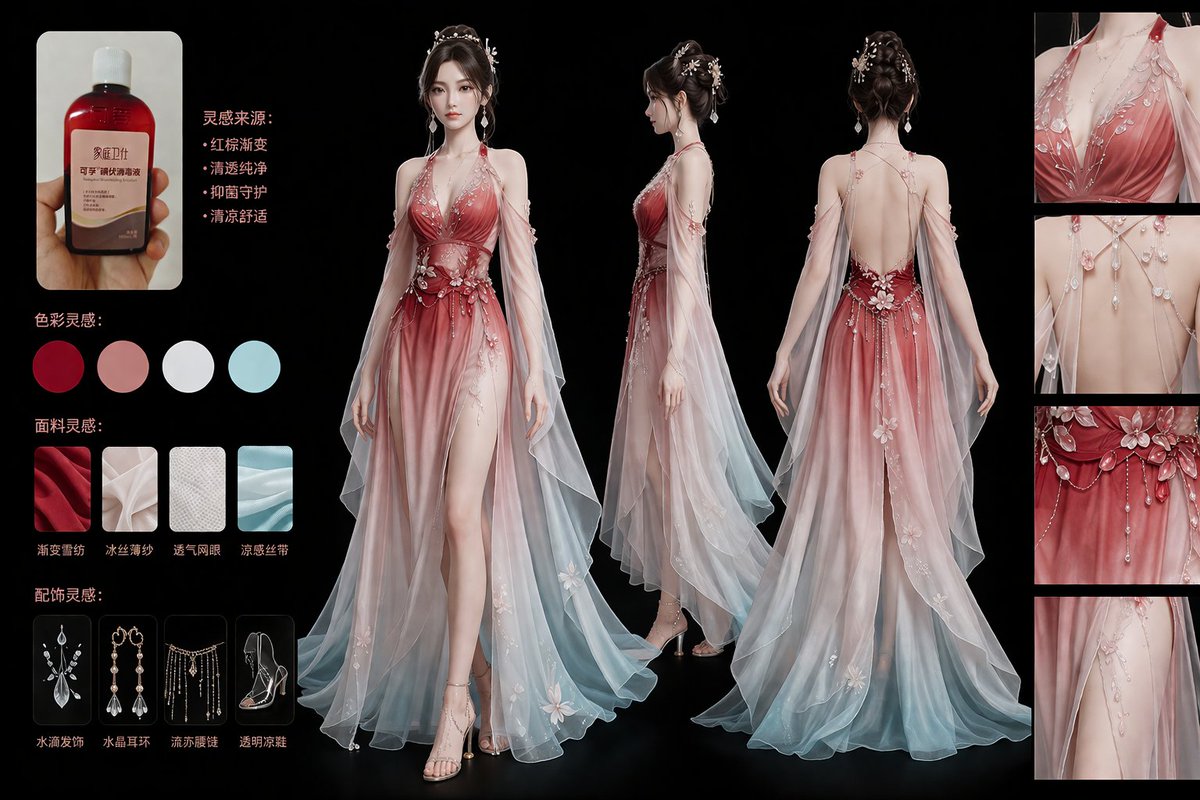
A two-line headline after a longer phrase has pushed it to three lines and moved the wrap point down

Image Text Editor

Longer words push the block, and the wrap point moves

Replacing a short phrase with a longer one changes how many lines the block occupies. A two-line headline can become three, a subhead that fitted on one line now runs under the margin, and a price that sat comfortably in a corner starts crowding the line beside it. This happens even when the typeface, size, and color are identical, and that is why a naive swap looks broken rather than merely wrong. Handling the re-wrap is most of what distinguishes an image text editor from a tool that simply paints new characters over old ones, and it is where the time goes.

A subhead that has grown until it rivals the headline beside a version where the ranking is still clear

Image Text Editor

Hierarchy is the first thing to break

Size is what tells a reader which line matters. If a replaced subhead grows taller than it was, it starts competing with the headline above it and the page no longer has a first thing to read. The same applies in reverse: a line that shrinks to fit a shorter phrase can drop out of the hierarchy altogether and read as a footnote. Keeping the relationships between the sizes is a deliberate job in any image text editor session, because the relationships are what the composition is made of rather than the individual lines.

A block where every line shares a left edge and baseline beside one where the lines have drifted apart

Image Text Editor

One grid holds the set together

The lines in a designed picture usually share something: a left edge, a baseline they sit on, a margin from the border, or a center line. That shared structure is what makes a block read as one thing rather than as several labels dropped in separately. New words have to land on the same grid, which means the left edge of a replaced headline stays where it was and its first baseline does not drift upwards or downwards. Overlooking the grid is why some edited pictures look plausible line by line and assembled as a whole. An image text editor that respects it produces a result nobody notices, which is the standard worth aiming at.

A package front with the message lines marked for change and the mark and legal line marked to stay

Image Text Editor

Decide which pieces are allowed to change

Not everything in the frame should be up for revision. A price, a date, a headline, and a product name are usually the visible message and are fair game. A maker's mark, a small legal line, a photographer's credit, and a certification number are structural: they were placed to satisfy something, and altering them changes what the picture asserts. Sorting the two groups before starting is what keeps an image text editor from wandering into text that was not asked about, and it takes a minute against the cost of catching it later. Reading the frame for those two categories is the step worth doing before writing anything.

A picture holding both a headline laid over the frame and a label printed on an object inside the scene

Image Text Editor

Words on the design and words in the scene behave differently

A headline laid over a photograph sits in front of everything and can move freely. A label printed on a bottle, a sign on a wall, or lettering on a shirt sits on a surface inside the picture and carries that surface's perspective, lighting, and wear. The two need opposite treatment: the first is a layout problem, the second is a rendering problem, and a picture can contain both at once. An image text editor session goes more smoothly when the two categories are separated before the request is written, because the wording of the instruction should say which kind it is dealing with. Mixing them in one request is how a headline ends up rendered onto a surface.

An edited block inspected at display size where spacing and legibility problems become visible between lines

Image Text Editor

Read the finished set where it will actually appear

Checking each line on its own misses the thing that matters. A block reads as a whole, and a problem usually appears between the lines: a gap that has become too tight, a line that now runs too close to the edge of the frame, a small piece of text that has become illegible at display size. Looking at the finished frame in the size it will be published at, rather than zoomed in, is the check that catches all three. It is the last step in any image text editor pass and the one most often skipped after a change that looked correct up close. It takes ten seconds and catches the mistakes that matter.

Image Text Editor

What an edit to lettering has to preserve

The properties that keep the block reading as a block.

Every line in the frame accounted for

All the lettering is identified before anything is changed, so the message lines can be revised while marks, credits, and legal text are left where they are. Counting them first is what an image text editor pass should begin with, and it prevents most rework.

Reflow handled rather than ignored

A longer phrase is allowed to occupy more width or an extra line, with the wrap point moved and the surrounding space adjusted, instead of being squeezed until it collides with something. That is the behavior worth expecting from a working image text editor.

Size relationships held

The ranking between a headline and the lines beneath it survives the change, so a replaced subhead does not grow into competition with the main line or shrink into a footnote.

Shared grid kept

Left edges, baselines, margins, and any center line from the original layout carry over to the new wording, which is what makes the block read as a single piece of design.

Structural text left alone

Marks, certification numbers, credits, and small print are excluded from the change, since those lines exist to assert something rather than to be read as the message.

Style carried over

Weight, width, spacing, and color follow whatever the original used, so a replaced line does not announce itself in the middle of a block that was set consistently.

Image Text Editor

Changing wording in a finished picture

Four steps, from reading the set to checking the result.

1

List the words in the frame and mark the ones that change

Go through every piece of lettering and decide which lines carry the message and which are structural. Everything in the second group is then excluded from the request.

2

Supply the new wording exactly, with its role

Quote the replacement text and say what it is, a headline or a subhead or a price, so the size and position it should take are clear. Naming the role is what an image text editor needs in order to place the line correctly.

3

Ask for the block to stay on its grid

State that the other lines keep their places and that the shared left edge and baselines are preserved, so the reflow happens around the change rather than through the layout. That single sentence is what most of an image text editor session depends on.

4

Look at the whole block at display size

Check the spacing between lines, the distance to the edge of the frame, and whether every piece is still legible where the picture will actually appear. Problems show up there rather than when zoomed in, and they are the last thing an image text editor pass should look for before the file goes out.

Image Text Editor

Questions about changing words in a picture

Reflow, hierarchy, fonts, and what should stay untouched.

What is an image text editor for?

It changes wording that is already part of a finished picture, such as a date, a price, a headline, or a product name, without rebuilding the design. It reads the whole composition, including the surrounding layout and the other lines, before making the change. That reading is what separates it from painting over the old characters.

Can I change a single word and leave the rest?

Yes, and that is the common case, but even a single word can change how many lines the block occupies. The other text keeps its own wording and position; what moves is the space around the line that changed, if the new wording needs it, and that local adjustment is the normal behavior of an image text editor.

What if the new wording is longer than the old?

The block re-wraps, which may add a line or widen the space the text occupies. That is normal and can be handled, but it is worth knowing that a much longer phrase will change the shape of the block, and it may be better to shorten the copy than to shrink the type.

Will the other lines in the picture move?

They should keep their positions, their size relationships, and their alignment with each other. Small adjustments around the changed line are sometimes necessary, and anything beyond that means the layout is being rebuilt rather than the wording revised. That is the line an image text editor should not cross without being asked to.

Can I choose a different font?

You can ask for one, and the more useful default is to keep whatever the picture already used, since a new face dropped into an existing block is usually obvious. If the original lettering is a custom mark or a logo, treat that as structural rather than as text.

What about a logo or a signature in the picture?

Leave those alone. A mark, a credit, or a certification number was placed to satisfy something, and changing it alters what the picture claims rather than what it says. Excluding them in the request is the simplest way to keep them intact.

Does the resolution of the picture matter?

It matters a great deal. Small lettering that occupies only a few pixels in the original leaves very little to rebuild, so a high resolution source gives an image text editor room to match the typeface and keep the edges clean. It is also the limit worth checking before promising a small line can be changed.